

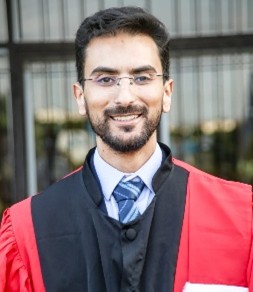
Session 1: Business & Sustainability in the Age of Digital Transformation
This session explores how digital transformation is reshaping business practices with a strong focus on sustainability. It brings together experts to discuss innovations in finance, marketing, and operations for sustainable growth. The session emphasizes the role of data analytics and digital technologies in improving efficiency and transparency. It highlights strategies for aligning business objectives with environmental and social responsibility.
Dr. Kaiss Redouane
Research Laboratory in Economics, Management, and Business Administration
Faculty of Economics and Management, Hassan 1st University, Settat, Morocco
Dr. Benjouid Zakaria
Research Laboratory in Economics, Management, and Business Administration
Faculty of Economics and Management, Hassan 1st University, Settat, Morocco
Dr. Amine Hmid
Hassan II University of Casablanca (Aïn Sebâa Campus), Morocco
✉️ amine.hmid1-etu@etu.univh2c.ma
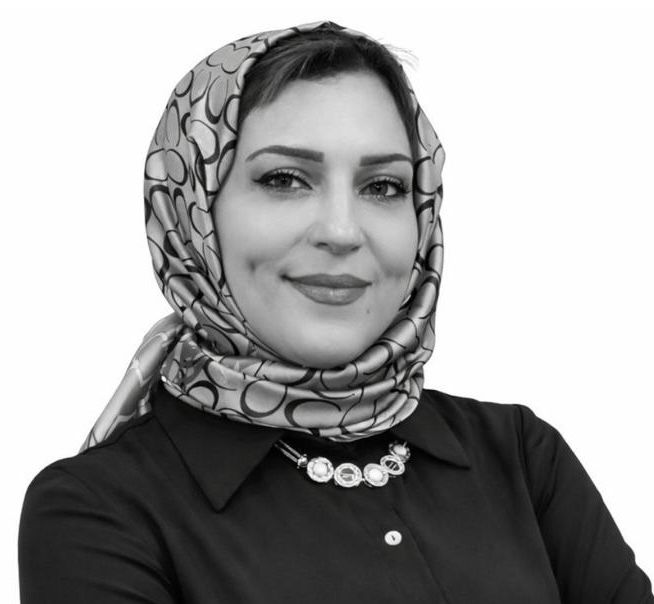
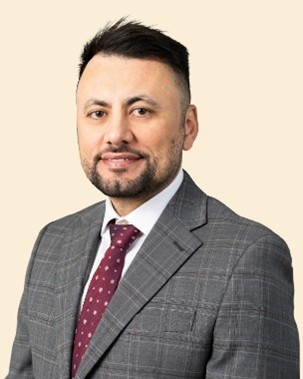

Session 2: Latest Trends in Industrial Engineering & Smart Manufacturing
This session focuses on advancements in industrial engineering and smart manufacturing in the era of Industry 5.0. It covers topics such as automation, digital twins, predictive maintenance, and smart logistics. The session highlights data-driven optimization, real-time monitoring, and efficient production systems. It aims to promote sustainable and intelligent manufacturing practices for modern industries.
Dr. Neyara Radwan
Associate Professor
Industrial Management Department, Liwa University, Abu Dhabi, UAE
Mechanical Department, Faculty of Engineering, SCU, Egypt
Dr. Yazan Otoum
University of Ottawa and Algoma University, Canada
otoum@algomau.ca
Dr. Salman Saleem
Department of Mathematics, King Khalid University, Abha 61413, Saudi Arabia
saakhtar@kku.edu.sa
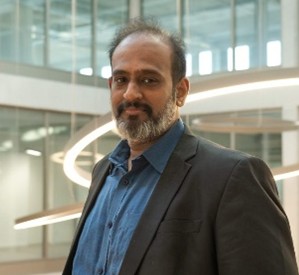

Session 3: Artificial Intelligence in Management: Transforming Organizations, Strategy, and Decision-Making
This special session focuses on the role of AI in transforming modern management and organizational practices. It covers AI-driven decision-making, business intelligence, and human–AI collaboration. The session highlights how AI enhances efficiency, innovation, and strategic planning. It also addresses ethical challenges, governance, and responsible AI adoption in organizations.
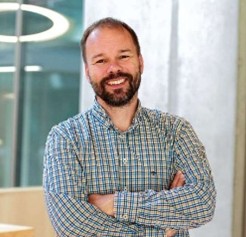
Prof. Dr. Valliappan Raju
Professor
FinTech Specialist | Research Leader | Academic Innovator
Gisma University of Applied Sciences GmbH, Germany
Prof. Dr. Tilmann Lindberg
Professor für Internationale Unternehmensführung
Gisma University of Applied Sciences GmbH, Germany
Dr. Mohammed Nazeh Alimam
Adjunct lecturer for Software Engineering, Software Quality Assurance, and Advanced Software Design
University of Europe for Applied Sciences, Germany
Session 4: Emerging Technologies & Innovation: Driving Digital Transformation and Sustainable Growth
This special session focuses on emerging technologies such as AI, IoT, and blockchain that are driving digital transformation and sustainable growth. It aims to bring together researchers and practitioners to explore innovation strategies, smart systems, and technology-driven entrepreneurship. The session highlights advancements in smart cities, cybersecurity, and green technologies. It provides insights into building sustainable and future-ready digital ecosystems.
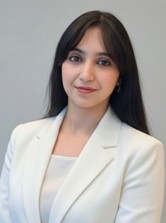
Dr. Hind Hammouch
Professor
Economics and Management
Sidi Mohamed Ben Abdellah University
Morocco

Session 5: Intelligent Computing and Data-Driven Informatics for Next-Generation Systems
This special session focuses on emerging advancements in intelligent computing and data-driven informatics that are shaping next-generation digital ecosystems. The session invites contributions addressing innovative methodologies, models, and applications in areas such as artificial intelligence, machine learning, data analytics, cloud and edge computing, and intelligent decision support systems. Emphasis is placed on interdisciplinary approaches that integrate computing paradigms with real-world problem-solving in domains like healthcare, smart cities, cybersecurity, and industrial automation. The session also aims to explore challenges related to scalability, data privacy, interpretability, and ethical considerations in intelligent systems. Researchers and practitioners are encouraged to present novel algorithms, frameworks, and case studies leveraging open datasets and reproducible research practices. By fostering collaboration between academia and industry, this session seeks to highlight transformative solutions that enhance efficiency, sustainability, and innovation in computing and informatics, ultimately contributing to the development of robust and intelligent digital infrastructures.
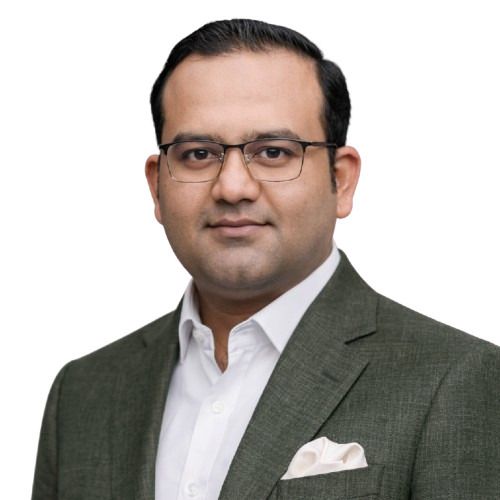
Dr. Shamim Akhtar
California State University, San Bernardino, Los Angeles
California, USA
Dr. Ghulam E Mustafa Abro
Aarhus University
Denmark
Dr. Roise Uddin
Pacific States University
California, USA



Session 6: Intelligent Financial Systems and Digital Commerce in the Era of Industry 5.0
This special session explores the integration of intelligent systems, artificial intelligence, and Industry 5.0 technologies in transforming banking and e-commerce. It focuses on smart financial services, digital payment ecosystems, and AI-driven customer experiences.
Dr. Bui Thanh Khoa
Industrial University of Ho Chi Minh City, Viet Nam
buithanhkhoa@iuh.edu.vn
Dr. Phan Hong Hai
Industrial University of Ho Chi Minh City, Viet Nam
phanhonghai@iuh.edu.vn
Dr. Phan Tran Minh Khue
Ho Chi Minh City University of Technology – VNU, Viet Nam
khueptm@hcmut.edu.vn
Session 7: From Generative AI to Agentic Intelligence: Transforming Enterprise Systems Across Industry Verticals
This special session targets a high-impact transition—from conventional AI/ML pipelines to generative and agentic AI systems that autonomously reason, plan, and execute enterprise workflows. Based on real deployments across telecom, healthcare, supply chain, and banking, the session highlights how LLMs, RAG, and AI agents deliver measurable improvements in modernization and decision-making.
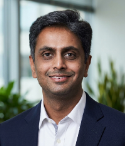
Gopalakrishnan Marimuthu
Cloud Application Architect, Amazon Web Services, USA
gopalakrishnan.marimuthu@ieee.org
Session 8: Intelligent Decision Systems at Scale: Hybrid AI and Rule-Driven Architectures for Enterprise Applications
This special session presents a production-validated architectural framework that resolves this tension through hybrid AI and rule-driven decision layers — combining the strengths of deterministic business rule engines with ML inference capabilities behind a unified API surface. Drawing from real-world implementation in enterprise retail pricing on Google Cloud Platform at The Home Depot, the session demonstrates how hybrid decision pipelines deliver intelligent, governed, and operationally resilient outcomes across mission-critical enterprise applications.
Prithvi Raj Veluchamy
Staff Software Engineer — Enterprise Pricing, The Home Depot, USA
prithviraj.veluchamy@gmail.com | prithviraj.veluchamy@ieee.org
Session 9: Streaming Intelligence: Real-Time Fraud Detection in Retail Payments Using Machine Learning
The special session focuses on a well-defined, emerging research domain within the broader scope of the conference. It aims to bring together researchers, industry experts, and practitioners to present original research contributions, recent technological advancements, innovative methodologies, and real-world applications related to the selected themes.
Gopalakrishnan Venkatasubbu
Independent Researcher, Georgia, USA
gopalakrishnan.venkatasubbu1@gmail.com
Session 10: Computer Vision and Intelligent Sensing for Healthcare and Mental Health Systems
This session explores the use of computer vision and intelligent sensing technologies in healthcare and biomedical systems. It focuses on AI-driven solutions for disease detection, health monitoring, and mental health analysis. The aim is to enable accurate, real-time, and scalable approaches for improved patient care and diagnostics.
Dr. Kanak Kalita
VSB-Technical University of Ostrava, Czech Republic
kal0378@vsb.cz
Dr. Kalaiselvi S
Rajalakshmi Institute of Technology, India
kalaiselvi.s@ritchennai.edu.in
Dr. Babak Safaei
Eastern Mediterranean University, Turkey
babak.safaei@emu.edu.tr
Session 11: Digital Twin-Driven Human–Machine Collaboration for Predictive and Sustainable Smart Manufacturing
This special session focuses on Digital Twin-driven human–machine collaboration for predictive and sustainable smart manufacturing. It highlights AI-enabled digital twins, real-time data integration, and human-centric Industry 5.0 systems. It brings together researchers and practitioners to develop resilient, efficient, and intelligent manufacturing solutions.
Dr. Ketan Kotecha
Symbiosis Institute of Technology, Pune, India
director@sitpune.edu.in
Dr. Aditi Saxena
Symbiosis Institute of Technology, Pune, India
aditi.saxena@sitpune.edu.in

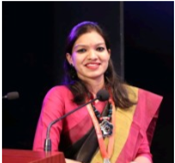
Session 12: AI-Enabled Digital Twin Networks for Inclusive Healthcare Systems in Industry 4.0 and 5.0
This special session explores the integration of AI-enabled digital twin networks, advanced sensor technologies, and intelligent systems to revolutionize inclusive healthcare for elderly, disabled, and underserved populations. It presents frameworks for real-time patient monitoring, predictive analytics, and personalized interventions with a strong focus on accessibility and ethical deployment.
Dr. Hemant Kasturiwale
Thakur College of Engineering and Technology, Mumbai, India
Dr. Sujata Alegavi
Thakur College of Engineering and Technology, Mumbai, India
Dr. Vidyadhari Singh
Thakur College of Engineering and Technology, Mumbai, India
vidyadhari.singh@tcetmumbai.in
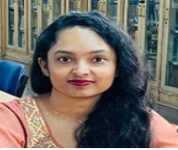

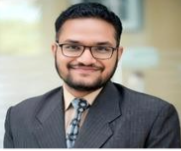
Session 13: Applications of ML and IoT in Sustainable Analytics and Management
This track explores the applications of artificial intelligence and machine learning in automation and technological advancement. It highlights the role of AI technologies such as AR, VR, chatbots, and robotics in transforming management practices and enabling sustainable analytics.
Dr. Aditi Srivastava
ABES Business School, India
Dr. Neha Verma
ABES Business School, India
Dr. Ankit Garg
AKGIM, India


Session 14: Advancements in Artificial Intelligence and Machine Learning for Intelligent Systems and Real-World Applications
This special session focuses on recent advancements in Artificial Intelligence and Machine Learning for solving complex real-world problems. It aims to bring together researchers and practitioners to explore innovative models, scalable algorithms, and intelligent systems across domains such as healthcare, cybersecurity, smart cities, and industrial automation.
Dr. C Kishor Kumar Reddy
Stanley College of Engineering & Technology for Women, India
Dr. P R Anisha
Stanley College of Engineering & Technology for Women, India
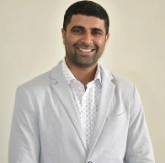

Session 15: Distributed Edge Intelligence: Bridging AI, IoT, and Cyber-Physical Systems
This session addresses the integration of intelligent algorithms within decentralized networks to enable autonomous, real-time decision-making across diverse domains. It explores the transition from centralized cloud processing to distributed edge intelligence, fostering innovation in AI, IoT, and cyber-physical systems.
Dr. Gunjan Chhabra
Swami Rama Himalayan University, India
Mr. Keshav Kaushik
Sharda University, India
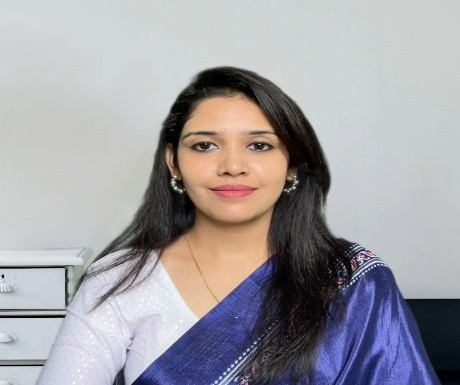
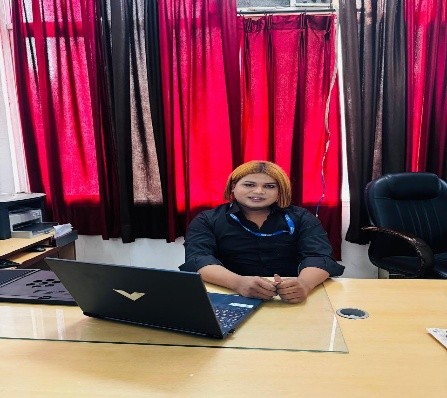
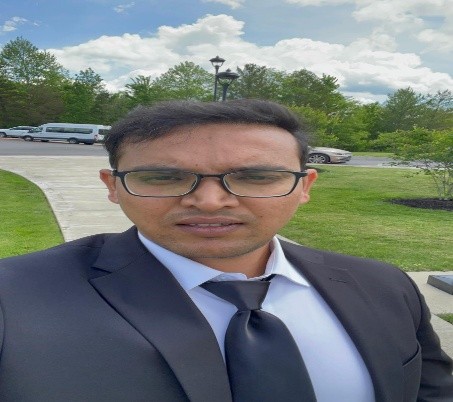
Session 16: Emerging Trends in AI-Based Predictive Healthcare Systems
Emerging Trends in AI-Based Predictive Healthcare Systems explores recent AI advancements for disease prediction, personalized treatment, and smart patient monitoring. It focuses on intelligent healthcare analytics, deep learning models, wearable technologies, and AI-driven clinical decision support systems for improving healthcare outcomes.
Dr. Kavita
Rayat Bahra University, Mohali, India
kavita@ieee.org
Er. Narinder Kumar
Rayat Bahra University, Mohali, India
Narinder.19159@rayatbahrauniversity.edu.in
Dr. Rahul Azmeera
University of the Cumberlands, USA
rahulazmeera@gmail.com

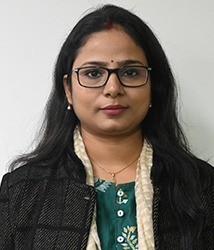
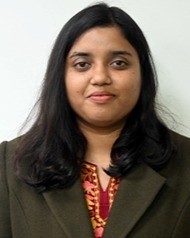
Session 17: Next-Generation AI Engineering and Intelligent Computing Innovations
This special session focuses on cutting-edge research and industrial innovations in Artificial Intelligence and Intelligent Computing. It aims to bring together researchers, practitioners, and industry experts to discuss advances in machine learning, deep learning, generative AI, intelligent systems, and emerging computing paradigms. The session highlights the integration of AI with cloud computing, edge intelligence, Internet of Things (IoT), cyber-physical systems, robotics, and data analytics to enable intelligent decision-making, automation, and sustainable digital transformation across multiple domains. Key themes include explainable AI, autonomous systems, digital twins, smart manufacturing, intelligent cybersecurity, and next-generation communication networks. The session encourages interdisciplinary contributions that address both theoretical foundations and practical applications of intelligent computing technologies.
Prof. Sarvesh Kumar
Assistant Professor
Amity Institute of Information Technology
Amity University, India
Dr. Arvind Kumar Mishra
Associate Professor
Amity Institute of Information Technology
Amity University Patna, India
Dr. Upasana Singh
Assistant Professor
Amity Institute of Information Technology
Amity University Patna, India
Dr. Priyadarshni
Assistant Professor
Amity Institute of Information Technology
Amity University Patna, India
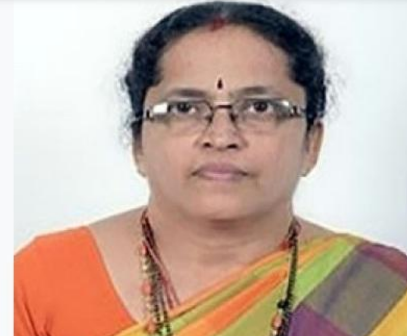
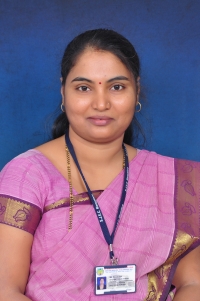
Session 18: Application of Machine and Deep Learning in Augmented Reality and Intelligent Systems
This special session focuses on the application of machine learning and deep learning techniques in augmented reality and intelligent systems. The session aims to bring together researchers, practitioners, and industry experts working on innovative methodologies and real-world applications that combine artificial intelligence with immersive technologies. Topics include computer vision, intelligent perception, gesture and speech recognition, edge AI, lightweight models, and real-time spatial understanding. The session highlights how advanced AI techniques can enhance augmented reality environments and enable next-generation intelligent systems across diverse application domains.
Dr. Surekha Kamath
School of Electrical Engineering
Manipal Academy of Higher Education
Karnataka, India
surekha.kamath@manipal.edu
Dr. Dayakshini
Department of Electronics and Communication Engineering (ECE)
St. Joseph Engineering College, Mangalore
Karnataka, India
dayakshini@gmail.com